
USD 7–9 million annually will be allocated to development programs for the communities affected by the Amulsar Project. The mechanism for managing these funds is set out in a tripartite agreement signed by the Government of Armenia, represented by the Ministry of Economy, Lydian Armenia, and the affected communities.
The program covers the communities of Sisian, Jermuk, and Vayk. The funds are expected to support priority community development needs, including infrastructure, education, healthcare, and other community development initiatives.
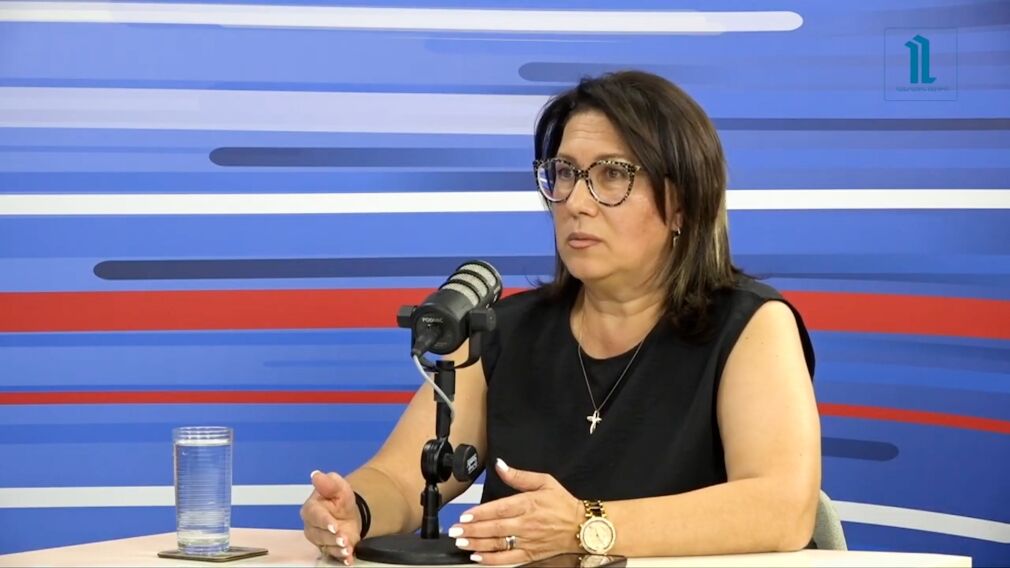
In an interview with the Economic Journalists Club, Lydian Armenia’s Social Manager, Lusine Hakobyan, emphasized that a key principle of the Agreement is to ensure that funding is directed specifically toward projects identified as priorities by the communities themselves.
To manage the funds, the Amulsar Community Development Foundation is expected to be established in the near future, serving as the implementing body for the program. Funding decisions will be made by the Foundation’s Board.
The Board will consist of seven members: four representing Lydian Armenia and three representing the respective affected communities. Decisions will be made by a majority vote.
According to Lusine Hakobyan, the Board’s primary function will be to make decisions on funding, while the Foundation’s mechanisms and resources will help ensure the effective implementation of the selected projects.
The annual social investment during the operational phase will amount to USD 7 million. This amount may increase to USD 9 million if the price of gold on international markets exceeds USD 3,550 per ounce.
The investment period is calculated from July 2025, when construction commenced. Accordingly, the first allocation will cover 18 months and amount to USD 10.5 million.
According to the company representative, the selected mechanism is designed to ensure clear and transparent use of the funds. Annual funding is expected to be disbursed on a quarterly basis, while the impact of the implemented projects on the communities is expected to become increasingly visible over the coming years.
The funds may be directed toward improving infrastructure, developing educational and healthcare facilities and programs, as well as supporting other socio-economic initiatives of importance to the communities.
Thus, the stated objective of the program is to deliver sustainable, long-term benefits for the communities rather than support of an individual nature.
Who Will Decide How the Funds Are Spent?
According to the company, discussions around the tripartite agreement lasted for more than eight months. The Amulsar Community Development Foundation will be responsible for managing the funds, while decisions on individual projects will be made by the Foundation’s Board.
At the same time, once a project is approved for funding, the selection of the contractor responsible for its implementation is expected to remain with the respective community, with the Foundation also participating in the process.
Another important feature of the funding mechanism is that at least 20% of the total amount allocated to each enlarged community must be directed specifically to the settlements affected by the mine.
This provision reflects the fact that Sisian, Jermuk, and Vayk are enlarged communities comprising a number of settlements. It is therefore important to ensure that the directly affected settlements have a guaranteed share of the funding.
Special Focus on Jermuk
Within the framework of the program, particular attention is given to Jermuk due to its status as a resort town. According to the company representative, the need to preserve the town’s resort environment has been taken into consideration.
In this context, Lydian Armenia notes that dedicated accommodation infrastructure has been established for employees to minimize the impact of their day-to-day needs on Jermuk’s resort environment.
According to the company’s vision, Jermuk’s future development should focus on strengthening its position as a resort town through improved infrastructure and services.
Ultimately, the program’s effectiveness will depend not only on the millions of dollars allocated, but also on how transparent and participatory the distribution process is, which projects are proposed and selected, and what measurable benefits they deliver for local residents.